
Learn names through pictures
Mushroom name typing
Look at the pictures and type the names of mushrooms.
Explore 16 names, one at a time.
About Mushroom name typing
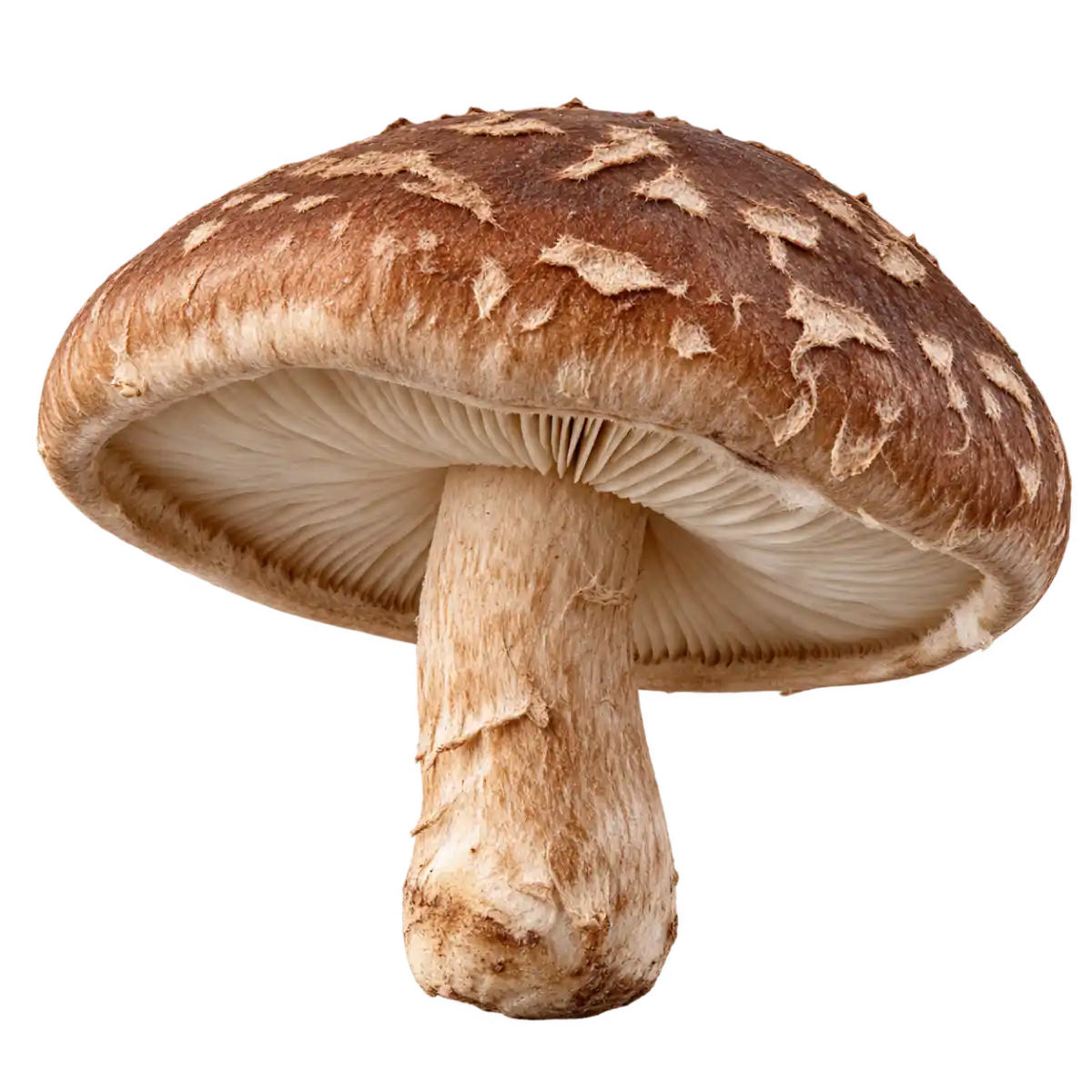
Mushroom name typing presents common English names beside representative mushroom illustrations. The printed name stays visible, so the game never requires you to identify a wild specimen. Read the label and copy it, using the picture only to connect a word with a simplified visual example. The set is about spelling everyday names, not deciding what a real mushroom is.
There are 16 entries from Shiitake to the final inkcap entry. Different cap and fruiting-body forms give the vocabulary a varied visual setting. The list is a selected learning range, not an identification key, a list of edible species or a guide to toxicity. The complete names are shown below the game for reading and review.
Common names may have registered alternatives. King oyster mushroom also accepts King trumpet mushroom, for example. Read the full compound name rather than assuming the shared word mushroom distinguishes the entry. Only alternatives stored for the current item are accepted. A name that passes in this game says nothing about the identity or properties of a real specimen.
Never use these illustrations to identify wild mushrooms or decide whether to collect them. Do not use the pictures, names or accepted answers to judge edibility, toxicity or medicinal effects. Real identification and collection decisions are outside the game. Keep this warning in mind even when an illustration resembles a mushroom you have seen; the representative art omits details needed for real-world assessment.
The first nonempty input starts the timer. A matching display name or registered English alternative advances automatically, so Enter is unnecessary for a correct answer. You can edit an unfinished word directly. Pressing Enter on an incorrect nonempty answer counts one error and clears the field; it does not count every deleted letter. After finishing, review elapsed time, keystrokes per minute and errors, then retry or choose another set. Best times stay in this browser separately for each topic, set and language.
How to play
- Choose a mushrooms set and check its scope and number of entries. Read the first visible English label before typing; the picture is there as context, so no advance memorization is needed.
- Type the displayed name or an English alternative registered for that entry. Read long labels in chunks while entering a single complete answer. Case, spaces and the supported punctuation variations are ignored during matching.
- When the answer matches, the next entry appears automatically without Enter. Check the new picture and label before continuing so the last letters of one word do not become the beginning of the next.
- Correct an unfinished answer directly in the field. Enter on a wrong nonempty answer adds one error and clears the input, leaving the same entry available to try again. Empty Enter does not count as an error.
- Finish the set to see elapsed time, keystrokes per minute and errors. Retry starts a new round; set selection lets you change the range. The best completion time is stored in the current browser for this topic, set and language.
Who is it for?
- Learners who want to read English mushrooms vocabulary with a picture and a visible name rather than an unlabelled identification quiz.
- Readers who encounter terms such as Shiitake and King oyster mushroom in introductory material and would like to become more comfortable writing them.
- People looking for a short, fixed-order typing activity that can be repeated at their own pace, with time and error statistics at the end.
- Families or study partners who want to compare the printed labels and registered alternatives together, while keeping the limitations of the illustrations in view.
Practice sets
- Basic 16 · 16 names
16 selected mushrooms names, from Shiitake to Shaggy inkcap. Read the complete labels beside the representative pictures and compare names such as Oyster mushroom and King oyster mushroom.
Names and spelling
Common names may have registered alternatives. King oyster mushroom also accepts King trumpet mushroom, for example. Read the full compound name rather than assuming the shared word mushroom distinguishes the entry. Only alternatives stored for the current item are accepted. A name that passes in this game says nothing about the identity or properties of a real specimen.
Registered English alternatives provide specific comparisons within this list: King oyster mushroom also accepts King trumpet mushroom; Enoki also accepts Enoki mushroom; Button mushroom also accepts White button mushroom; Brown beech mushroom also accepts Buna-shimeji. These alternatives apply to the individual entries shown here. The game does not translate an arbitrary answer, infer every synonym or accept an entire category in place of a specific name. If an alternative does not work, copy the visible label in full.
English answers are compared without letter case, spaces and the supported punctuation differences. You can also enter Latin letters without accent marks, use full-width forms, or type ss in place of ß. Those conveniences do not change the order of words or make different numbers equivalent. A supporting reading line is not automatically an accepted alternative: the displayed name and the registered answer list determine what passes.
Practice tips
- Copy the printed name without identifying a real specimen.
- Read the distinguishing part of each compound name.
- Compare only registered alternatives for the current item.
- Use the list to review spelling after a round.
- Do not infer edibility, toxicity or health effects from an answer.
- Never use a game picture to decide whether to identify or collect a wild mushroom.
Frequently asked questions
Do I need to recognize the mushrooms before playing?
No. The current English name is displayed with every picture, so you can read and copy it. Mushrooms name typing is practice in writing visible labels, and does not require you to guess an answer from an unlabelled image. Start slowly and use the name list below the game to review the vocabulary.
How many names are included and which set should I choose?
There are 16 entries from Shiitake to the final inkcap entry. Different cap and fruiting-body forms give the vocabulary a varied visual setting. The list is a selected learning range, not an identification key, a list of edible species or a guide to toxicity. The complete names are shown below the game for reading and review.
Which English alternatives are accepted?
King oyster mushroom also accepts King trumpet mushroom; Enoki also accepts Enoki mushroom; Button mushroom also accepts White button mushroom; Brown beech mushroom also accepts Buna-shimeji. Only the alternatives registered for the current item are accepted. They do not enable automatic translation or every possible synonym. The displayed name is always a safe way to continue, even if you are unsure which other form is registered.
Do capitalization, spaces and spelling marks have to match exactly?
Letter case and spaces are ignored, along with the supported punctuation variations. Latin accent marks and full-width forms are normalized in this language, and ß can be entered as ss. The meaningful letters, number and order still need to match a registered answer. Read the whole current label rather than relying on just one shared word.
What can I learn from the pictures, and what are their limits?
Never use these illustrations to identify wild mushrooms or decide whether to collect them. Do not use the pictures, names or accepted answers to judge edibility, toxicity or medicinal effects. Real identification and collection decisions are outside the game. Keep this warning in mind even when an illustration resembles a mushroom you have seen; the representative art omits details needed for real-world assessment.
How do the timer, errors and best times work?
The timer starts at the first nonempty input and stops when the set is finished. An error is counted when Enter is pressed on an incorrect nonempty answer, rather than for every deletion or correction. The best completion time is saved in this browser separately by topic, set and language. Retry begins a new round; using shorter registered alternatives can change the amount of typing.
Representative pictures for learning mushroom names. Never use these images to identify wild mushrooms, decide whether to collect them, or assess edibility or toxicity.