
Learn names through pictures
Cloud name typing
Look at the pictures and type the names of clouds.
Explore 10 names, one at a time.
About Cloud name typing
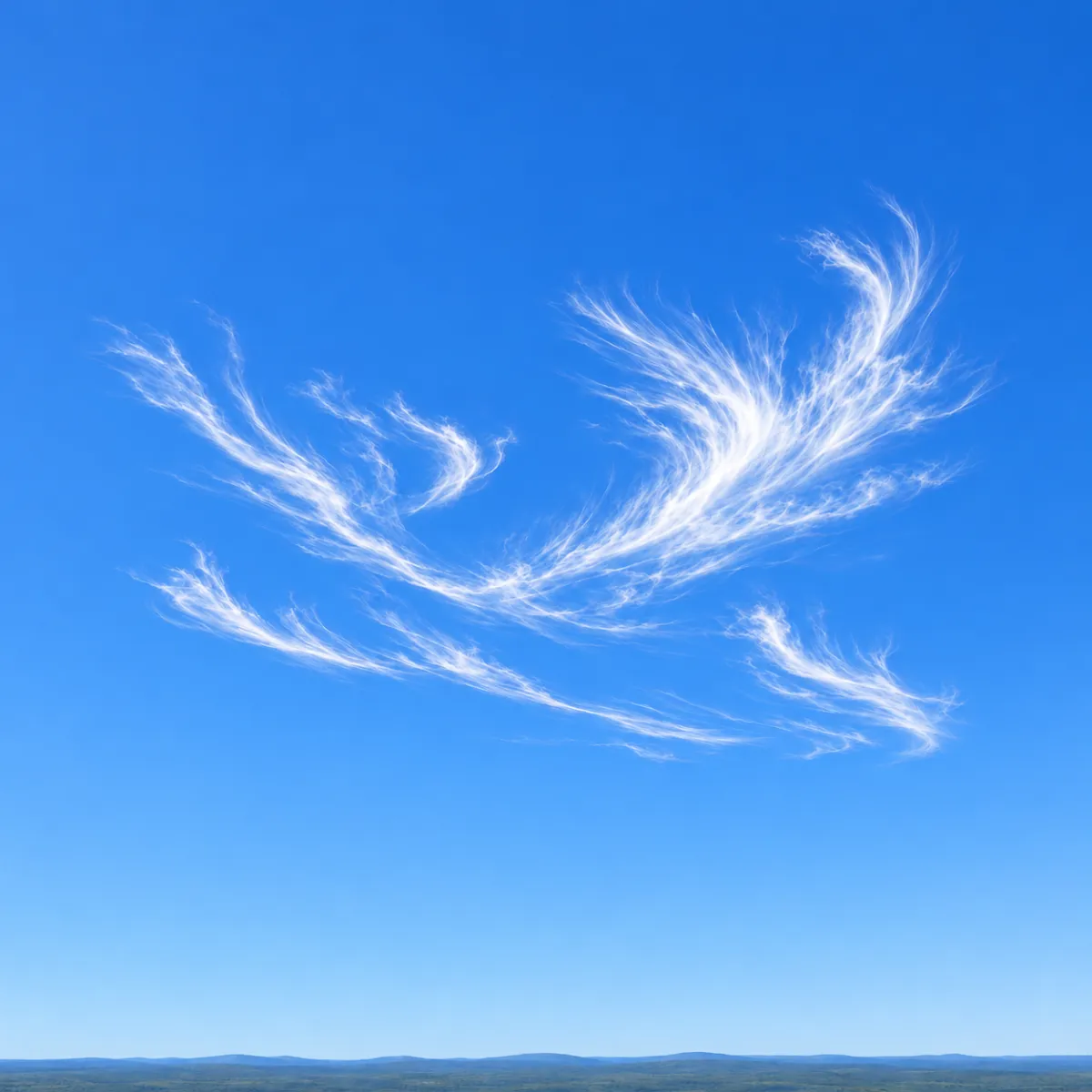
Cloud names describe layers and masses spread across the sky. This activity presents the ten WMO cloud genera as educational sky scenes, with each name visible beside the image. The blue sky and low horizon belong to the opaque scene rather than to a transparent cutout. Read the complete label and use the arrangement of wisps, layers or towers to connect its spelling with the selected example.
The fixed sequence runs from Cirrus through Cirrocumulus, Cirrostratus, Altocumulus, Altostratus, Nimbostratus, Stratocumulus, Stratus and Cumulus to Cumulonimbus. English labels use the Latin genus names. Other languages have their own display names and registered alternatives. Species and supplementary features are not mixed into this ten-genus set as equivalent categories, and a broad everyday term does not automatically answer for several different genera.
Cirrocumulus shows fine white grains; Altocumulus has larger patches with gray shading. Compare the thin veil and halo of Cirrostratus with the blue-gray sheet and dim sun of Altostratus. Stratus is relatively uniform, while Stratocumulus has broad lumpy masses. Cumulus has separate heaps; Cumulonimbus develops a tall tower and a fibrous anvil in this example. Halos and anvils are selected cases rather than universal features. These illustrations cannot identify real skies, measure height or predict weather.
Displayed clouds names include Cirrus · Cirrocumulus · Cirrostratus · Altocumulus · Altostratus · Nimbostratus · Stratocumulus · Stratus · Cumulus · Cumulonimbus. Only the current-language label and alternatives registered for that entry are answers; the game does not infer arbitrary translations or synonyms. Japanese hiragana and the displayed Chinese toneless pinyin are also accepted. Case, spaces and supported punctuation are normalized. Latin accents may be omitted and German ß may be typed as ss, while meaningful name differences and numbers remain distinct.
The first nonempty input for Cirrus starts the timer. A matching answer advances without Enter, so read longer labels such as Altostratus completely before continuing. You can edit unfinished text directly. Enter on an incorrect nonempty answer adds one error and clears that attempt; empty Enter and Enter during input-method composition do not add errors. After the set’s final label, such as Cumulonimbus, review time, keystrokes per minute and errors, then retry the same sequence. Best times stay in this browser, separated by topic, set and language.
How to play
- Choose a clouds set and read the first picture together with its visible label, such as Cirrus.
- Copy a complete label such as Altostratus, or use an alternative registered for that entry.
- A matching clouds name advances automatically. Read the next illustration and name before typing again.
- Edit unfinished text for Cirrus directly; Enter on an incorrect nonempty attempt adds one error and clears the field.
- Reach the final entry, such as Cumulonimbus, review the statistics and retry the same fixed sequence.
Who is it for?
- Beginners who want a visible label such as Cirrus beside a clouds picture.
- Readers practicing complete spellings and longer labels such as Altostratus at their own pace.
- Classes or study partners dividing 10 clouds names into short fixed-order typing sessions.
- People who want to finish at Cumulonimbus and compare their own time and errors on a retry.
Practice sets
- Basic 10 · 10 names
Follow 10 names in clouds Basic 10, from Cirrus to Cumulonimbus, in the source’s fixed order. Read examples such as Altostratus beside their pictures and practice registered alternatives as well as the full displayed labels.
Names and spelling
Cirrocumulus shows fine white grains; Altocumulus has larger patches with gray shading. Compare the thin veil and halo of Cirrostratus with the blue-gray sheet and dim sun of Altostratus. Stratus is relatively uniform, while Stratocumulus has broad lumpy masses. Cumulus has separate heaps; Cumulonimbus develops a tall tower and a fibrous anvil in this example. Halos and anvils are selected cases rather than universal features. These illustrations cannot identify real skies, measure height or predict weather.
Displayed clouds names include Cirrus · Cirrocumulus · Cirrostratus · Altocumulus · Altostratus · Nimbostratus · Stratocumulus · Stratus · Cumulus · Cumulonimbus. Only the current-language label and alternatives registered for that entry are answers; the game does not infer arbitrary translations or synonyms. Japanese hiragana and the displayed Chinese toneless pinyin are also accepted. Case, spaces and supported punctuation are normalized. Latin accents may be omitted and German ß may be typed as ss, while meaningful name differences and numbers remain distinct.
Educational sky scenes depict the ten WMO cloud genera. They cannot identify real weather, measure cloud height or provide forecasts. Halos and anvils are selected examples, not features present in every case.
Practice tips
- Cirrocumulus shows fine white grains; Altocumulus has larger patches with gray shading.
- Compare the thin veil and halo of Cirrostratus with the blue-gray sheet and dim sun of Altostratus.
- Stratus is relatively uniform, while Stratocumulus has broad lumpy masses.
- Cumulus has separate heaps; Cumulonimbus develops a tall tower and a fibrous anvil in this example.
- Copy a complete label such as Altostratus, or use an alternative registered for that entry.
- Reach the final entry, such as Cumulonimbus, review the statistics and retry the same fixed sequence.
Frequently asked questions
Which clouds names can I practice?
Cloud names describe layers and masses spread across the sky. This activity presents the ten WMO cloud genera as educational sky scenes, with each name visible beside the image. The blue sky and low horizon belong to the opaque scene rather than to a transparent cutout. Read the complete label and use the arrangement of wisps, layers or towers to connect its spelling with the selected example.
What does the range from Cirrus to Cumulonimbus cover?
The fixed sequence runs from Cirrus through Cirrocumulus, Cirrostratus, Altocumulus, Altostratus, Nimbostratus, Stratocumulus, Stratus and Cumulus to Cumulonimbus. English labels use the Latin genus names. Other languages have their own display names and registered alternatives. Species and supplementary features are not mixed into this ten-genus set as equivalent categories, and a broad everyday term does not automatically answer for several different genera.
How can I compare Altostratus with similar names?
Cirrocumulus shows fine white grains; Altocumulus has larger patches with gray shading. Compare the thin veil and halo of Cirrostratus with the blue-gray sheet and dim sun of Altostratus. Stratus is relatively uniform, while Stratocumulus has broad lumpy masses. Cumulus has separate heaps; Cumulonimbus develops a tall tower and a fibrous anvil in this example. Halos and anvils are selected cases rather than universal features. These illustrations cannot identify real skies, measure height or predict weather.
What are the limits of the clouds illustrations?
Educational sky scenes depict the ten WMO cloud genera. They cannot identify real weather, measure cloud height or provide forecasts. Halos and anvils are selected examples, not features present in every case.
Which spellings and readings work for clouds?
Displayed clouds names include Cirrus · Cirrocumulus · Cirrostratus · Altocumulus · Altostratus · Nimbostratus · Stratocumulus · Stratus · Cumulus · Cumulonimbus. Only the current-language label and alternatives registered for that entry are answers; the game does not infer arbitrary translations or synonyms. Japanese hiragana and the displayed Chinese toneless pinyin are also accepted. Case, spaces and supported punctuation are normalized. Latin accents may be omitted and German ß may be typed as ss, while meaningful name differences and numbers remain distinct.
Where is my result after Cumulonimbus stored?
The first nonempty input for Cirrus starts the timer. A matching answer advances without Enter, so read longer labels such as Altostratus completely before continuing. You can edit unfinished text directly. Enter on an incorrect nonempty answer adds one error and clears that attempt; empty Enter and Enter during input-method composition do not add errors. After the set’s final label, such as Cumulonimbus, review time, keystrokes per minute and errors, then retry the same sequence. Best times stay in this browser, separated by topic, set and language.
Educational sky scenes depict the ten WMO cloud genera. They cannot identify real weather, measure cloud height or provide forecasts. Halos and anvils are selected examples, not features present in every case.