
Learn names through pictures
Aircraft structure name typing
Look at the pictures and type the names of aircraft structure.
Explore 16 names, one at a time.
aircraft structure typing guide →
About Aircraft structure name typing
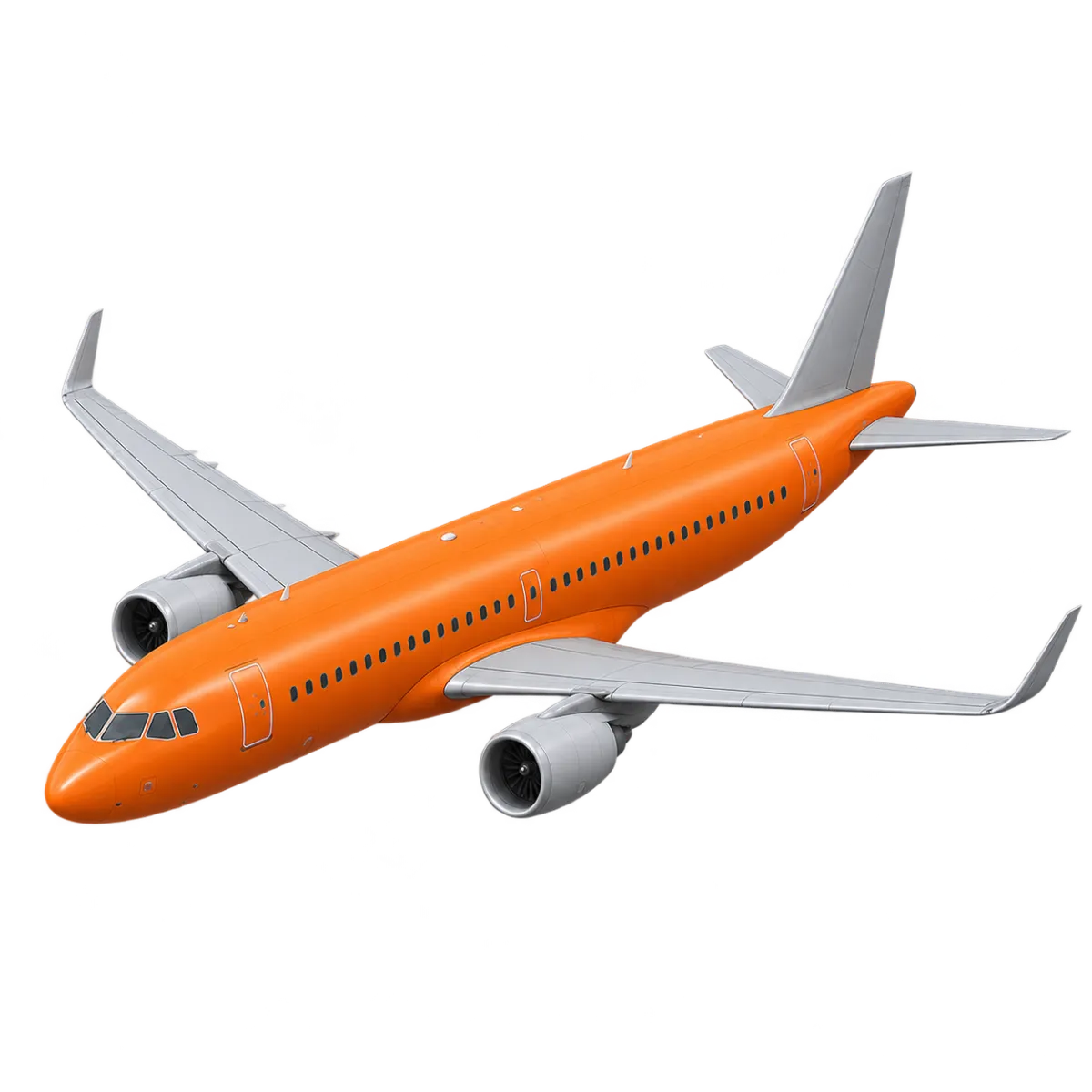
Read aircraft anatomy by following the orange selection against a gray airframe. The model is a generic twin-engine jet airliner, with both large structural regions and smaller control surfaces represented. The label stays visible, so familiarity with aircraft types is unnecessary. Pause on the selected area, read its name, and copy the complete term before moving to the next illustrated location.
Sixteen entries begin with Fuselage, Main wing and the two fixed stabilizers. Aileron, Flap, Slat and Spoiler introduce wing surfaces, followed by Rudder and Elevator. Landing gear, Turbofan engine, Engine nacelle, Engine pylon, Radome and Winglet complete the route. These are structural names rather than airport or airline names; the sequence separates an assembly from its covering and its supporting connection.
Vertical stabilizer is not the Rudder, and Horizontal stabilizer is not the Elevator. The gray adjoining surface helps show where one ends and the other begins. Slat uses the leading-edge context while Flap is read at the trailing edge. Engine nacelle surrounds the engine; Engine pylon supports its connection to the airframe. Do not replace either specific label with the general answer engine.
This low-wing, swept-wing model with a conventional tail does not represent every aircraft design. Landing gear includes strut and links as well as tires, and the turbofan uses a partial cutaway. Gray contextual pieces may continue beyond an enlarged view. None of the pictures establishes dimensions, structural strength, operating procedures or a safe flight condition; use them to practice the printed vocabulary.
The first nonempty input for Fuselage starts the timer. When Main wing or another new label appears, read its picture and complete name before continuing. A matching answer advances without Enter, and unfinished text can be edited in place. Enter on an incorrect nonempty answer adds one error and clears that attempt. After Winglet, review time, keystrokes per minute and errors; the best time stays in this browser by topic, set and language.
How to play
- Open the basic 16 aircraft structure names and read the first label, Fuselage, with its selected area.
- Copy a complete label such as Main wing, or an alternative registered for that particular entry.
- A matched aircraft structure name advances automatically; pause to read the new illustration before continuing.
- Edit an unfinished Fuselage answer directly. Enter on incorrect nonempty text counts one error and clears the field.
- Finish at Winglet, review the statistics and retry the same 16-name sequence as a new round.
Who is it for?
- Readers beginning aircraft structure vocabulary who want a visible name such as Fuselage beside a picture.
- Learners comparing the complete spelling and scope of longer labels such as Main wing.
- Classes or study partners using a fixed sequence of 16 aircraft structure names for a short typing activity.
- People who prefer to reach Winglet at their own pace and compare personal time and errors on a retry.
Practice sets
- Basic 16 · 16 names
Copy 16 representative names in order from Fuselage to Winglet, comparing the spelling and selected range of terms such as Main wing.
Names and spelling
Vertical stabilizer is not the Rudder, and Horizontal stabilizer is not the Elevator. The gray adjoining surface helps show where one ends and the other begins. Slat uses the leading-edge context while Flap is read at the trailing edge. Engine nacelle surrounds the engine; Engine pylon supports its connection to the airframe. Do not replace either specific label with the general answer engine.
The actual display list is Fuselage · Main wing · Vertical stabilizer · Horizontal stabilizer · Aileron · Flap · Slat · Spoiler · Rudder · Elevator · Landing gear · Turbofan engine · Engine nacelle · Engine pylon · Radome · Winglet. Each label is an independent entry; a containing structure does not automatically answer for its parts. Use the current-language display name or a specifically registered alternative. The game does not infer arbitrary synonyms, abbreviations or translations. Letter case, spaces and supported punctuation are normalized; Latin accent marks can be omitted and ß can be entered as ss, without changing meaningful word order or numbers.
This low-wing, swept-wing model with a conventional tail does not represent every aircraft design. Landing gear includes strut and links as well as tires, and the turbofan uses a partial cutaway.
Practice tips
- Vertical stabilizer is not the Rudder, and Horizontal stabilizer is not the Elevator.
- The gray adjoining surface helps show where one ends and the other begins.
- Slat uses the leading-edge context while Flap is read at the trailing edge.
- Engine nacelle surrounds the engine; Engine pylon supports its connection to the airframe.
- Copy a complete label such as Main wing, or an alternative registered for that particular entry.
- Finish at Winglet, review the statistics and retry the same 16-name sequence as a new round.
Frequently asked questions
Which aircraft structure names can I practice?
Read aircraft anatomy by following the orange selection against a gray airframe. The model is a generic twin-engine jet airliner, with both large structural regions and smaller control surfaces represented.
What does the list from Fuselage to Winglet cover?
Sixteen entries begin with Fuselage, Main wing and the two fixed stabilizers. Aileron, Flap, Slat and Spoiler introduce wing surfaces, followed by Rudder and Elevator.
What distinctions matter when reading Main wing and related names?
Vertical stabilizer is not the Rudder, and Horizontal stabilizer is not the Elevator. The gray adjoining surface helps show where one ends and the other begins. Slat uses the leading-edge context while Flap is read at the trailing edge.
What are the limits of the aircraft structure illustrations?
Gray contextual pieces may continue beyond an enlarged view. None of the pictures establishes dimensions, structural strength, operating procedures or a safe flight condition; use them to practice the printed vocabulary.
Which written answers work in the aircraft structure set?
Use the current-language display name or a specifically registered alternative. The game does not infer arbitrary synonyms, abbreviations or translations. Letter case, spaces and supported punctuation are normalized; Latin accent marks can be omitted and ß can be entered as ss, without changing meaningful word order or numbers.
Where is my result after Winglet stored?
Enter on an incorrect nonempty answer adds one error and clears that attempt. After Winglet, review time, keystrokes per minute and errors; the best time stays in this browser by topic, set and language.
This low-wing, swept-wing model with a conventional tail does not represent every aircraft design. Landing gear includes strut and links as well as tires, and the turbofan uses a partial cutaway. Gray contextual pieces may continue beyond an enlarged view. None of the pictures establishes dimensions, structural strength, operating procedures or a safe flight condition; use them to practice the printed vocabulary.